What does it mean to remain human in a world increasingly shaped by artificial intelligence? At the Jeu de Paume in Paris, the exhibition Le Monde Selon l’IA (“The World According to AI”) asks this question through unsettling imagery and critical inquiry. Drawing on investigative works, blended with new media installations, the exhibition peels back the glossy surface of AI to reveal the systems of surveillance, labor, and power that fuel it. Today, when machines are trained on human faces, human words, and human lives, this exhibition becomes more than just art, it is a place of deep reflection. What kind of intelligence are we cultivating? And can we still choose to build technologies that reflect human values and impact society in a positive way, rather than erode them?
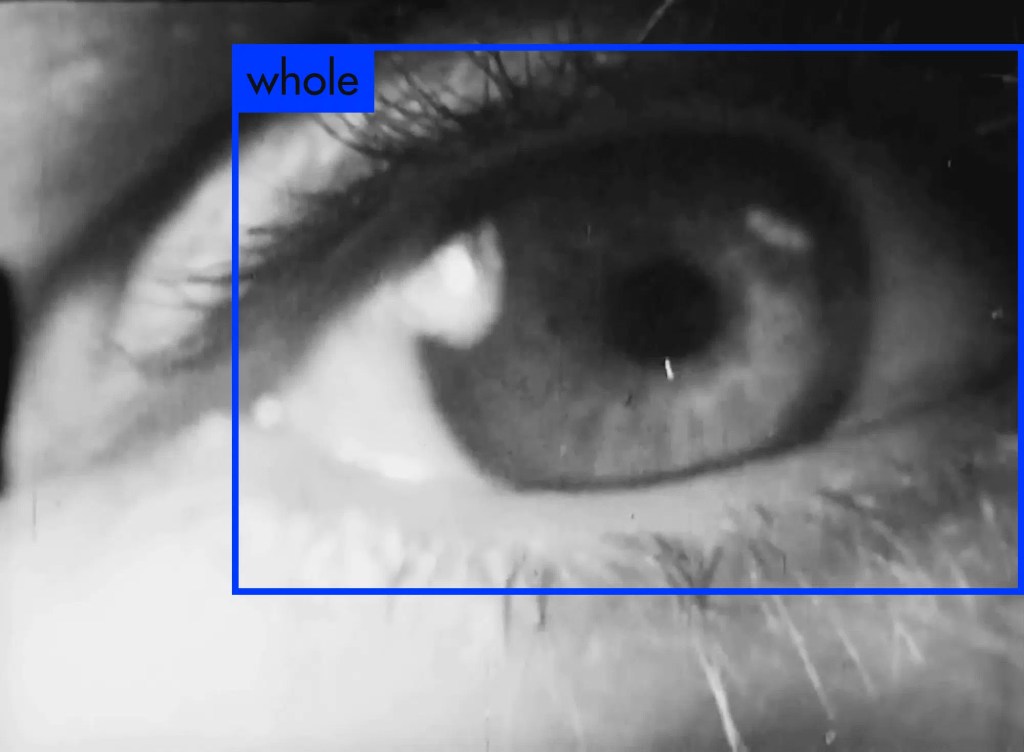
Estampa, Extrait de l’oeuvre : What do you see, YOLO9000? Estampa, 2019
© Estampa
by Asya Lisitskaya
In the heart of Paris, nested in the Jardin de Tuiliers, the Jeu de Paume exhibition space has long been a sanctuary for photography, video and new media art installations. But this spring it has become something else – a mirror of our fast-moving world. Its newest exhibition, “Le Monde Selon l’IA’ (The World According to AI), doesn’t just display the digital reflections of artificial intelligence, it confronts us with much deeper questions: What kind of world are we building through the machines we are training? And how to remain human?
Visitors enter into a space pulsing with photographs generated by code, portraits seen through the cold lens of facial recognition systems, landscapes constructed by neural networks trained on images of the Earth we are rapidly reshaping. At first glance, it’s a fascinating gallery of the strange and sublime. But beneath the surface lies a story of human labor, natural resources, corporate ambition, and urgent ethical crossroads.
Your Face Belongs to Them
In one of the exhibition’s installations, thousands of faces flicker in a hypnotic sequence on a screen.
As I enter the space, I instantly feel under surveillance. The tiny camera captures my face and brings it in the middle of a big screen, with running sequence of carious terms and definitions about what my identity might be: “Collen, an Irish girl”, “Sociolinguist”, “Journalist”.
It brings back to mind the revelations from Kashmir Hill’s groundbreaking book “Your Face Belongs to Us”. Hill uncovers the rise of companies like Clearview AI, which scraped billions of images from the internet to build facial recognition tools now used by law enforcement. These tools were trained on our digital selves – uploaded photos, social media images – without conscent, turning the public into a private surveillance tool.
At Jeu de Paume, this reality is rendered visible. The machine doesn’t jsut see faces – it classifies, predicts, and polices them. In a world where your likeness can be mined, bought, and weaponised, the exhibition reminds us: AI is not neutral. It reflects the priorities of those who built and own it.
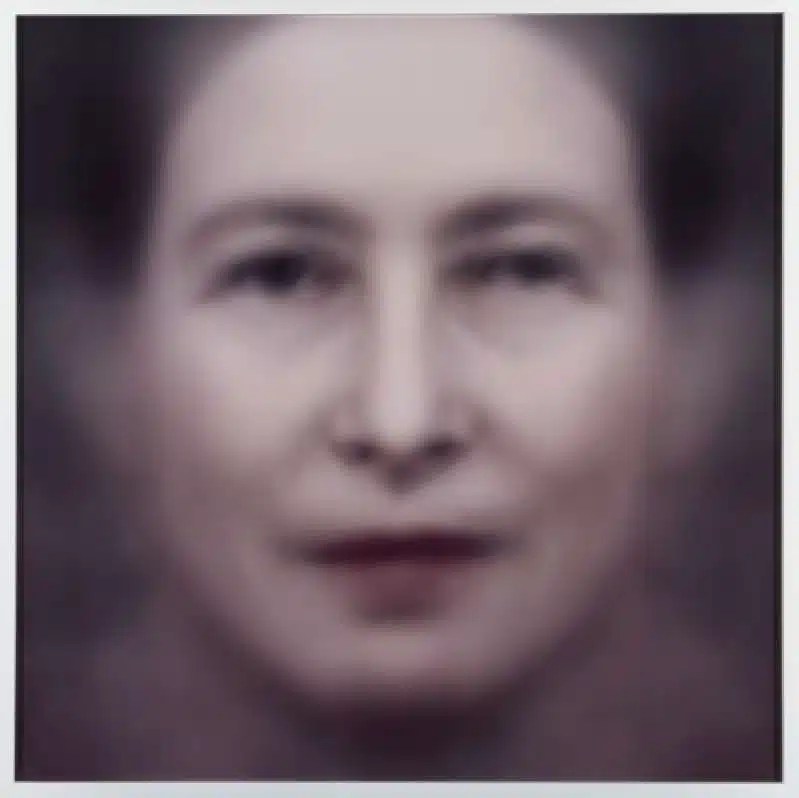
Trevor Paglen “De Beauvoir” (Even the Dead Are Not Safe), Eigenface (Colorized) 2019.
© Centre Pompidou, musée national d’Art moderne/Centre de création industrielle.
Don du Virginia M. Zabriskie Fund, Amis du Centre Pompidou, 2024.
Inv. no: AM 2024-117
Feeding the Machine with Human Lives
James Muldoon’s book “Feeding the Machine” underscores the unseen human cost of AI. Every neatly translated phrase, every accurate AI-generated caption or image, is made possible by an invisible workforce. The installation “Meta Office: Behind the Screens of Amazon Mechanical Turk” pulls the curtain back on the global outsourced micro-labour behind the machines: the data labelers in Kenya, the content moderators in the Philippines, the annotators in Venezuela. They are the real intelligence behind artificial intelligence.
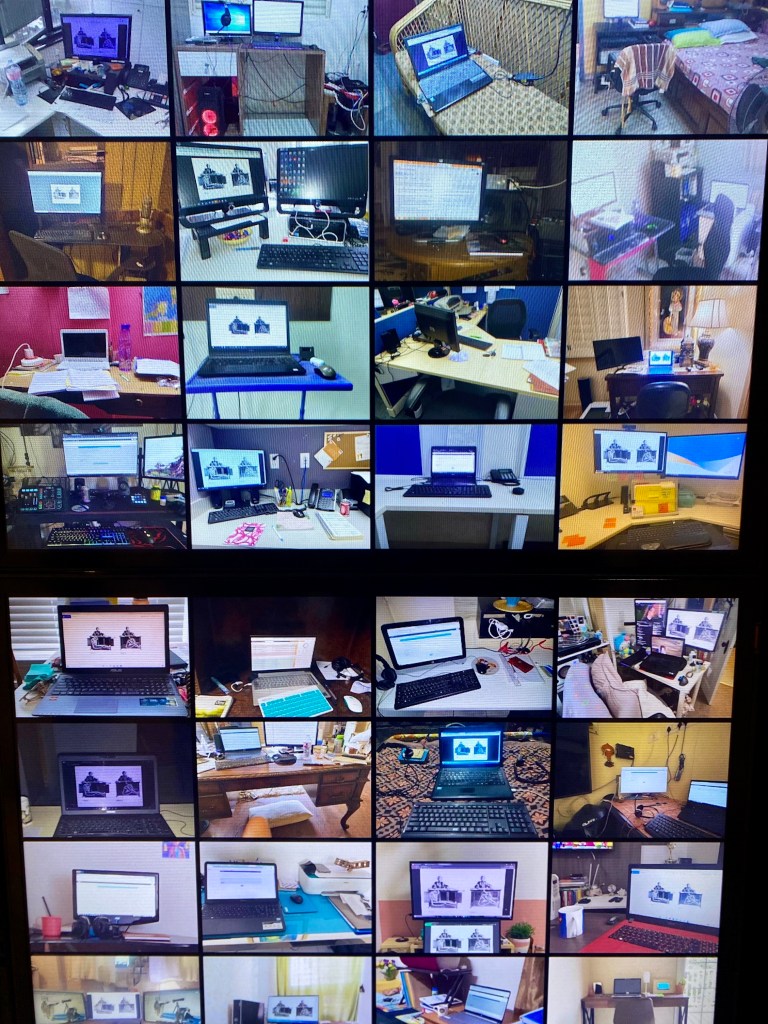
Meta Office: Behind the Screens of Amazon Mechanical Turks. 2021-2025
© Meta Office
In Le Monde Selon l’IA, this exploitation is laid bare in a haunting multimedia piece: voices narrate the monotonous, emotionally draining tasks they perform for cents per hour, while images flicker showing the traumatising, click-by-click work of tagging violence, hate speech, or traffic signs. The glamour of AI innovation dissolves, revealing a global division of digital labor that eerily echoes colonial patterns – wealthy nations automate, poorer ones clean the data.
One quote from the exhibition that summarises it very well is: “the tendency towards delirious repetition” that describes the work “Repetition Penalty” by Estampa collective – using LEDs to display texts generated by generative AI models, highlighting their “recursive logic and their tendency towards delirious repetition”.
A Call for Tech Morality
Another link between the exhibition and investigative reporting that comes to mind is a reference to a book by Rana Foroohar’s “The Case Against Big Tech” that provides the intellectual backbone of the exhibition’s political critique. Foroohar argues that the consolidation of data and power in the hands of tech giants like Google, Amazon, and Meta undermines democracy and erodes public trust. Their AI models, optimized for profit and engagement, often neglect the consequences – privacy violations, misinformation, environmental impact.
The curators at Jeu de Paume take this to heart. One room, dimly lit and cathedral-like, asks a simple but profound question: “What if we designed AI to serve the public good, rather than private gain?” Screens display alternative AI projects like community-driven language models, climate forecasting tools built on open data, indigenous data sovereignty projects. These glimpses of ethical AI hint at a more just and sustainable future, one not dictated by a handful of tech monopolies.
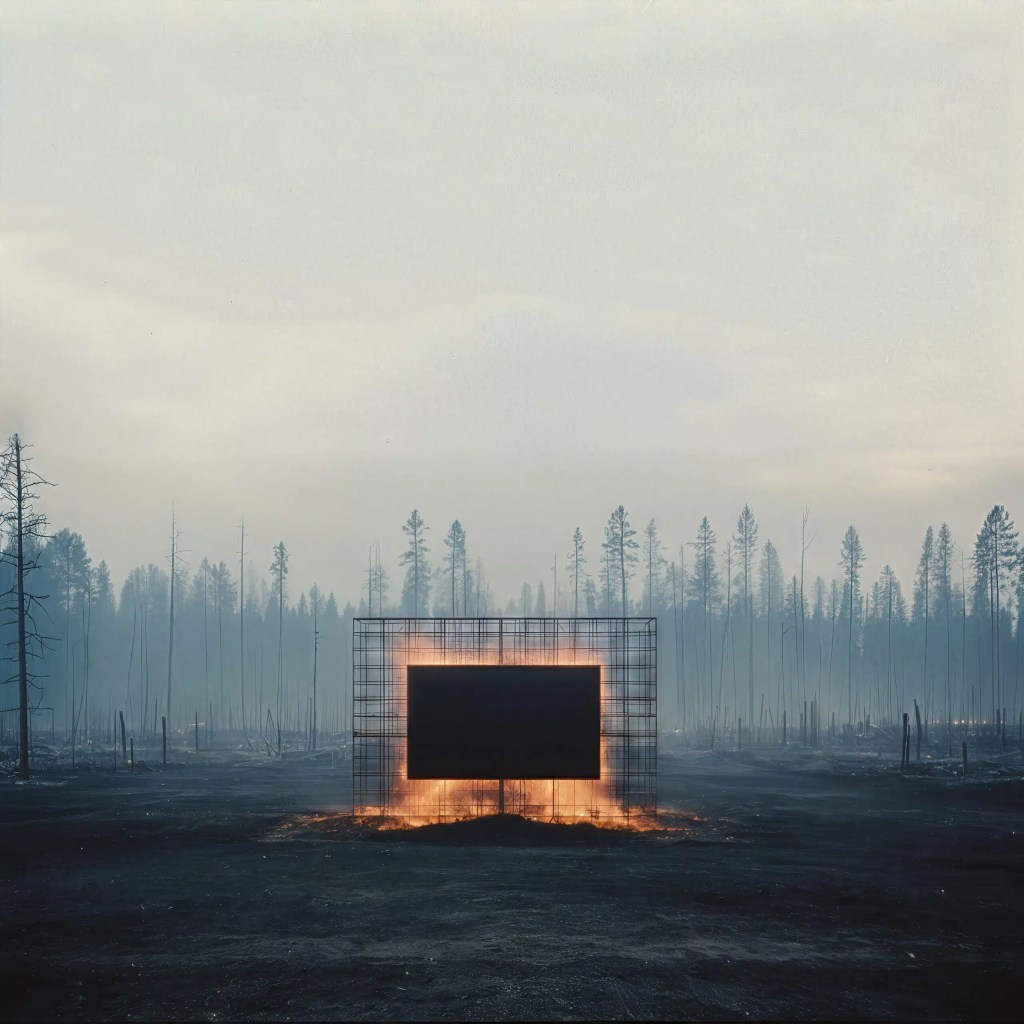
Gregory Chatonsky, La Quatrième Mémoire, 2025 Installation © Gregory Chatonsky
The Earth, the Machine, and Us
AI consumes more than just data. It devours electricity, minerals, and water – natural resources that are often overlooked in debates about digital progress. Training a single large AI model can emit as much carbon as five cars in their lifetimes. And the rare earth metals used in the hardware come with environmental and human tolls, from toxic waste to child labor and warfare.
Jeu de Paume does not flinch from this reality. A powerful installation features a mound of earth and e-waste beneath a projection of satellite images – forests turned to mines, rivers drained by server farms, deserts dotted with solar arrays feeding data centers. It is a stark reminder: our “virtual” revolution has very physical costs.
In one of the exhibition’s space, a powerful installation by Kate Crawford and Vladan Joler reveals the global impact of AI on Earth and people: “Anatomy of an AI System: An Anatomical Case Study of the Amazon Echo as an Artificial Intelligence System Made of Labor, 2018”
The Moral Code We Must Write
As visitors exit the exbihition, they pass a wall where artists, scholars, and ordinary people have left handwritten messages: What kind of world do we want to build? Can machines be ethical if we are not? What future are we coding into existence? And how to remain Human?
These are not rhetorical questions. They are a challenge. If AI is to become a true extension of human potential, it must also reflect our highest values – fairness, transparency, sustainability, and care. That requires new governance, new cultural narratives, and perhaps most critically, new moral imagination.
In the age of artificial intelligence, the machines may be learning fast. But the real test is whether we can learn just as quickly – about ourselves, our systems, and the kind of world we wish to build, and how we can truly be human.
Written by Anastasia Lisitskaya for Filter Magazine, May 2nd, 2025.
Anastasia has been working for over 15 years at the intersection of industries combining expertise in Digital and Organisational Transformation, Marketing Strategies, Design and Creative fields. She has been working extensively in digital departments of various global brands and global digital consulting agencies. Her recent assignments included development of intra-organisational knowledge sharing ecosystems using AI-powered platforms. The topics of Artifical Intelligence, technological advancements, and their impact on people, organisations and society are at the core of her current work.

Leave a comment