How did the 2024 and 2019 Venice Biennales reflect our most pressing social issues?
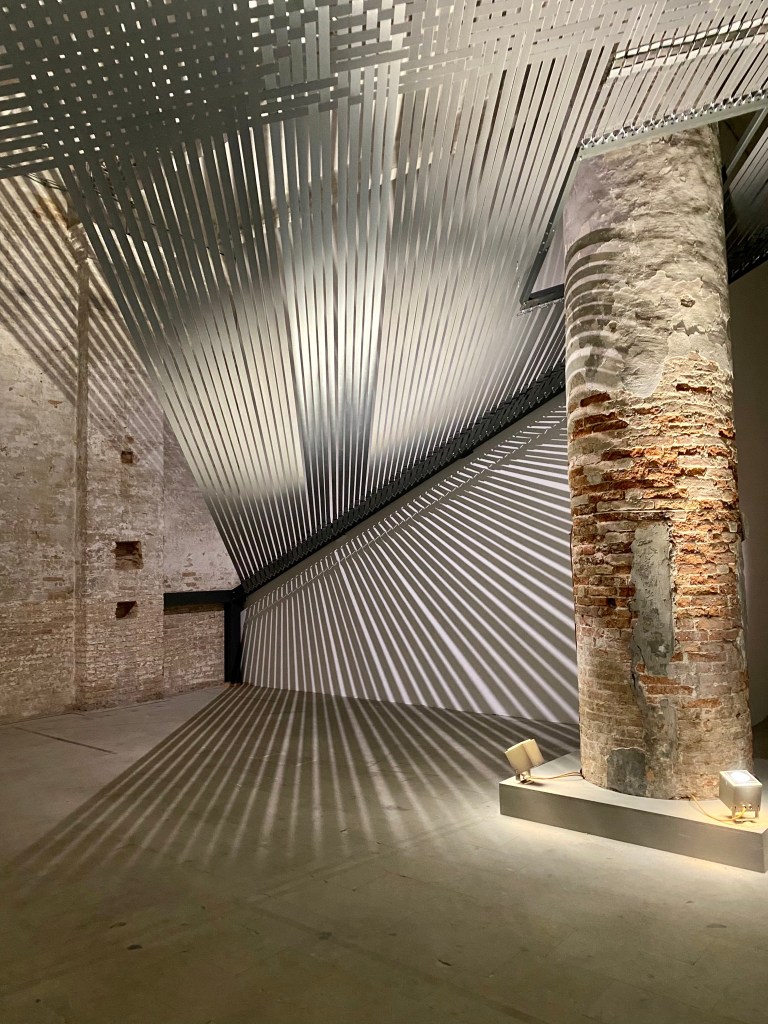
The Māori Mataaho Collective received the highest prize, the Golden Lion, for the Best Participant in the International Exhibition, Stranieri Ovunque – Foreigners Everywhere (photo A.C. Standen-Raz 2024)
Venice, April 2024 – Comparing the themes of the 2019 and 2024 Biennale di Venezia, which, if either, got its social message across?
At this year’s Venice Biennale, the Guardian critic Adrian Searle reported feeling “beguiled, tantalised – and frequently appalled” by the works curated under the theme “Foreigners Everywhere.” This year’s Golden Lion winner was the large-scale mesmerising installation takapau, a woven mat created by the Mataaho Collective, consisting of Māori women artists Bridget Reweti, Erena Baker, Sarah Hudson, and Terri Te Tau “to recognise often-overlooked labourers, emphasising the strength derived from interdependence and honouring a legacy that deserves acknowledgement.” At the 58th Biennale, with the theme “May You Live in Interesting Times” ( ironically a few months before COVID-19 struck the globe), Searle found himself a spectator “not (of) interesting times, but the last days.” The Lithuanian Pavilion won a Golden Lion that year with Sun & Sea, an opera-performance by Rugilė Barzdžiukaitė, Vaiva Grainytė and Lina Lapelytė. Viewers observed from a mezzanine as around 20 performers laid out on an artificial beach, occasionally breaking into song, and slowly frying to death as climate change melts the earth. Did each Biennale reflect Searle’s partly downbeat judgments, and how did they live up to the curators’ visions and desired impacts?

Rugilė Barzdžiukaitė, Vaiva Grainytė and Lina Lapelytė, Sun & Sea (Marina), 2019. Photo Andrej Vasilenko/Courtesy of the artists
The Venice Biennale, which skipped a year due to the Pandemic, is an overwhelming and exhausting experience for even the fittest and most ardent art lover. FOMO is rampant, as is the comedic one-upmanship to lay claim to seeing ALL the best works, like a collection of baseball cards or a grand slam. Whatever the curator of each year attempts to express, the mammoth task of an art critic to walk several kilometres each day to view up to 2000 artworks, made by 300+ artists from 69 countries, is physically impossible without the power of self-replication. Arguably, depending on the route selected through this forest of art, an attendee’s journey through a Biennale could result in experiencing wildly different sensations. But with the principal curator and artistic director acting as conductors – linking diverse installations, artworks and performances with an intricate web of meaning – each coordinated filament should provoke the desired emotional and cognitive response from attendees around the curator’s chosen theme – at least as close to the bulls eye as possible.
So what did each curator set out to achieve with their Biennale? Ralph Rugoff, Curator of the 58th International Art Exhibition, wrote, “In a speech given in the late 1930s, British MP Sir Austen Chamberlain invoked an ancient Chinese curse that he had learned of from a British diplomat who had served in Asia, and which took the curious form of saying, “May you live in interesting times.” “There is no doubt that the curse has fallen on us,” Chamberlain observed. “We move from one crisis to another. We suffer one disturbance and shock after another.” This summary sounds uncannily familiar today as the news cycle spins from crisis to crisis. Yet at a moment when the digital dissemination of fake news and “alternative facts” is corroding political discourse and the trust on which it depends, it is worth pausing whenever possible to reassess our terms of reference.” In particular Climate Change – a theme close to Venetian’s hearts: on the 12th of November 2019, toward the end of that year’s Biennale, nature created its own exhibition: 80% of Venice was submerged by an almost 2m high tide of water. “Venice is at the forefront of the battle against climate change”, stated Shaul Bassi, professor of English literature at Ca’ Foscari University of Venice.
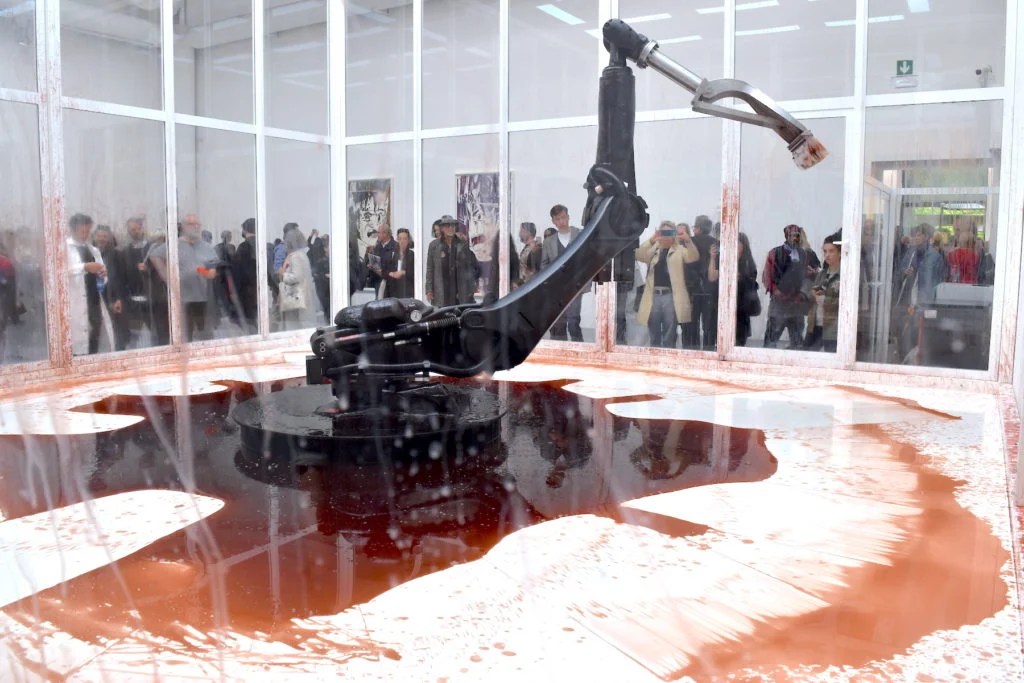
Sun Yuan and Peng You, Can’t Help Myself (2016). Image courtesy Ben Davis.
Adriano Pedrosa, curator of the 60th International Art Exhibition, La Biennale di Venezia, provided this introduction, “The backdrop for the work is a world rife with multifarious crises concerning the movement and existence of people across countries, nations, territories and borders, which reflect the perils and pitfalls of language, translation, nationality, expressing differences and disparities conditioned by identity, nationality, race, gender, sexuality, freedom, and wealth. In this panorama, the expression Foreigners Everywhere has several meanings. First of all, that wherever you go and wherever you are you will always encounter foreigners — they/we are everywhere. Secondly, that no matter where you find yourself, you are always truly, and deep down inside, a foreigner…The Biennale Arte 2024’s primary focus is thus artists who are themselves foreigners, immigrants, expatriates, diasporic, emigres, exiled, or refugees.
There are many similarities in the sentiments of the statements between the two Biennales, which bookended a full cycle of wars and disasters, from Ukraine to various devastating earthquakes, and which both featured highly newsworthy works that placed the theme of often war-driven refugees central to the festival: Christoph Büchel’s Barca Nostra in 2019, and the Gaza War this year, which led to the curator snd the artists of the Israeli pavilion refusing to open it “until a ceasefire and hostage release agreement have been reached”. Both statements reference borders, both the physical barriers imposed on us that restrict movement, and the more metaphorical categories we impose on ourselves. Both curators project a certain degree of realism, with a healthy degree of hope that art can guide our way out of this mess. Rugoff wishes that “(May You Live in Interesting Times) will entail engaging visitors in a series of encounters that are essentially playful, taking into account that it is when we play that we are most fully “human”. For Pedrosa, “La Biennale itself, as an international event with so many official participations by numerous different countries, has always been a platform for the exhibition of works of foreigners from all over the world. In this rich tradition, the 60th International Art Exhibition of La Biennale di Venezia, the Biennale Arte 2024, will be a celebration of the foreign, the distant, the outsider, the queer, as well as the indigenous.”
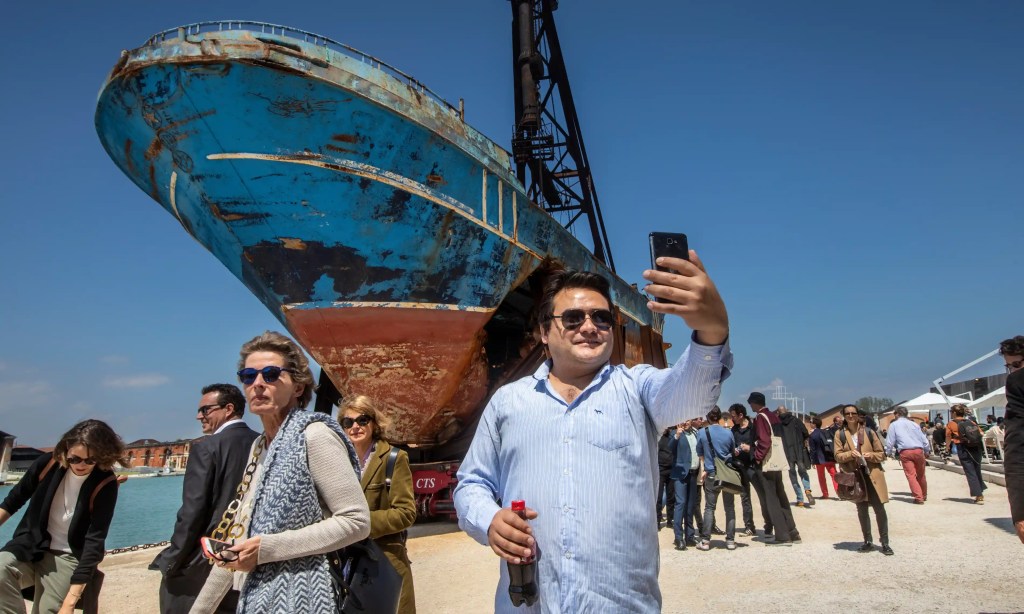
A man takes a selfie in front of Barca Nostra, at the 58th Venice Biennale. Photograph: David Levene/The Guardian
Having attended both these Biennales, the harried pavilion-level experiences of art critics such as Searle, and the lofty philosophical engagement of the curators frequently co-exist in a viewer’s mind. At Venice, faced with sometimes extraordinary, sometimes disappointing artworks, and blasted with “More Issues than Vogue”, we are all Stranieri – Camus’ l’étranger and Scarlet Johansson’s Charlotte, exhilarated, dazed and confused, frustrated, lost in a dazzling Tokyo-esque playground, where around each corner a new challenge awaits. The entire experience of these Biennales, framed by a city simultaneously intensely romantic and laced with creepy dead-ends, is largely elitist, a first world perspective that serves an orgy of colonial guilt-porn as art (Italy had its hand in empire pillaging). The perfect one stop shop for a year’s worth of instagram posts decorated with refugees and climate change fetishism.
To answer our question, do art festivals present the best mirrors to our times? At this scale, it’s hard not to hit a target. This year, the comprehensive installation The Disobedience Archives, a project by Marcus Scotini focusing on the relationship between artistic practices and activism, presented under the focus of Diaspora activism and Gender Disobedience, includes video clips and work from 39 artists and collectives. The Ukrainian pavilion includes multiple highly moving video portraits of those enduring ceaseless bombing, as well as other installation elements. Live performances by young dancers pop up at random between hundreds of other elements vying for attention. What Searle captions “Everything Everywhere All at Once.” He concludes “Marked by unrest and protests, the 60th Venice Biennale leaves us uncertain of art’s ability to draw us together in a world in crisis. It is filled with the clamour of conflicting voices and doubtful purpose.” His verdict on the 58th seems equally sour: “Mawkish monuments and the beach from hell.” Both statements ignore the simple, effective experience of facing humanity in all its many forms – and the artists attempting to find ever more ingenious ways to force us to wake up from our soporific acceptance of things as they are.
Leaving Venice, the faces in portraits, performances and of the Venetians literally sinking into the sea, stay in our minds the longest, challenging our complicity in this ride to hell in a handbasket. This year, at a small art world encounter along a Venice passage between exhibitions, a gallerist’s eyes light up at the mention of the Lithuanian Pavilion five years earlier: “Absolutely stunning! And so timely.” At least one person sold.
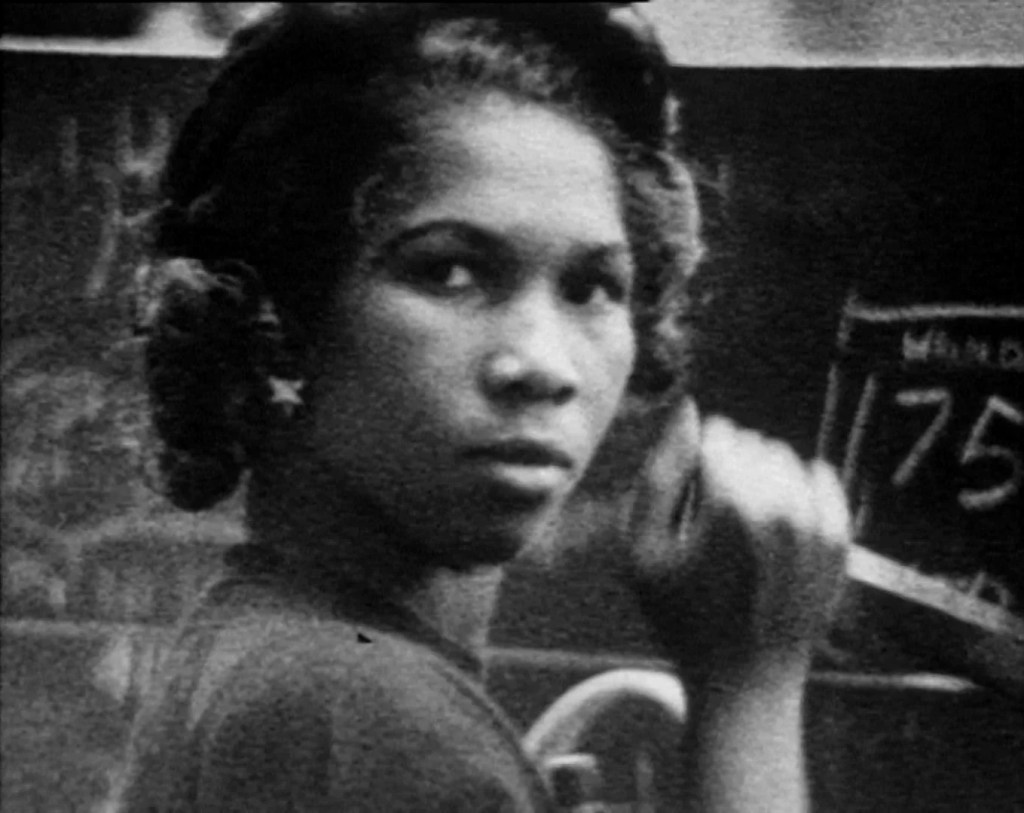
Still from Handsworth Songs (1986) from Black Audio Film Collective (BAFC), a group of seven artists founded in 1982, from Disobedience Archives + Still from the Ukrainian Pavilion, Civilians. Invasion by Andrii Rachynskyi and Daniil Revkovskyi featuring archival videos collected from open sources, shot by civilians before and during the Russian invasion. Both from 60th Venice Biennale (Photo A.C. Standen-Raz)
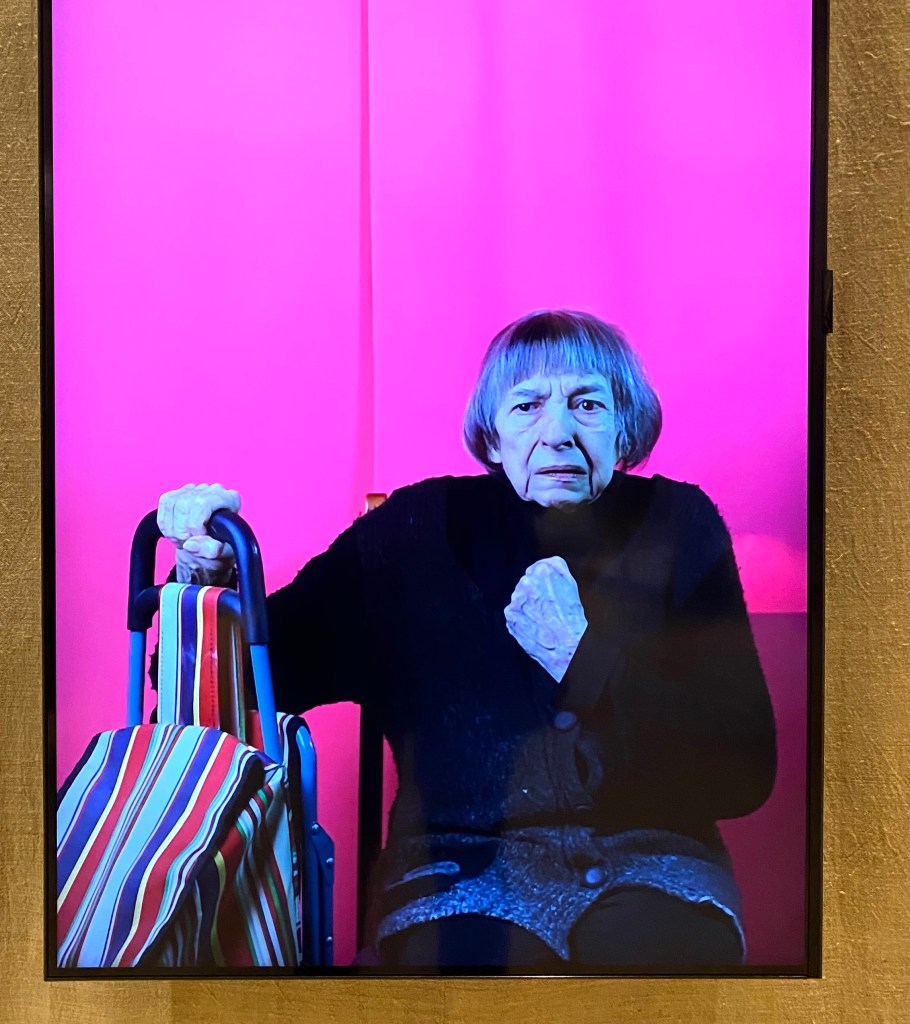
“Art will not save us from bombs or bullets. But it saves our consciousness, our humanity, and our values,” remarked First Lady Olena Zelenska as she presented this year’s Ukrainian Pavilion, while Russian attacks on Ukrainian cities and villages continued unabated. “In Ralph Rugoff’s Venice Biennale, the World’s Artists Take Planetary Doom as a Given, But Search for Joy Nonetheless,” notes an article by Ben Davis of Artnet. Reflecting life, turning it into a fun game, or pinning it on canvas like captured butterflies, has left change still far out of reach – as underscored in the curators’ statements, and the endless pile-on of miserable disasters and perennial placards stating “I can’t believe I’m still protesting this shit”. Büchel’s Barca Nostra has not altered the number of immigrants dying in the watery borders around A-List countries. The World is getting hotter and the billionaires weirder, while behind curtains in the Arsenale a film of a dancer coated in what looks like oil performs in an endless, dying loop.
And then, this year, the Israeli pavilion transforms from art to political activism, complete with protests, and armed police nervously protecting other works that might trigger the usually docile visitors. There is Art and there is direct action to make change. We need both, and both – from Guernica to anti-war protesters, from Shepard Fairey to Campus peace activists – rely on each other for inspiration and impact. We need to see more and listen more, and stay open-minded and empathetic to the plight of our fellow humans. As the curators and artists of the still closed Israeli Pavilion declared this year, ‘art can wait but women, children and people living though hell cannot’,
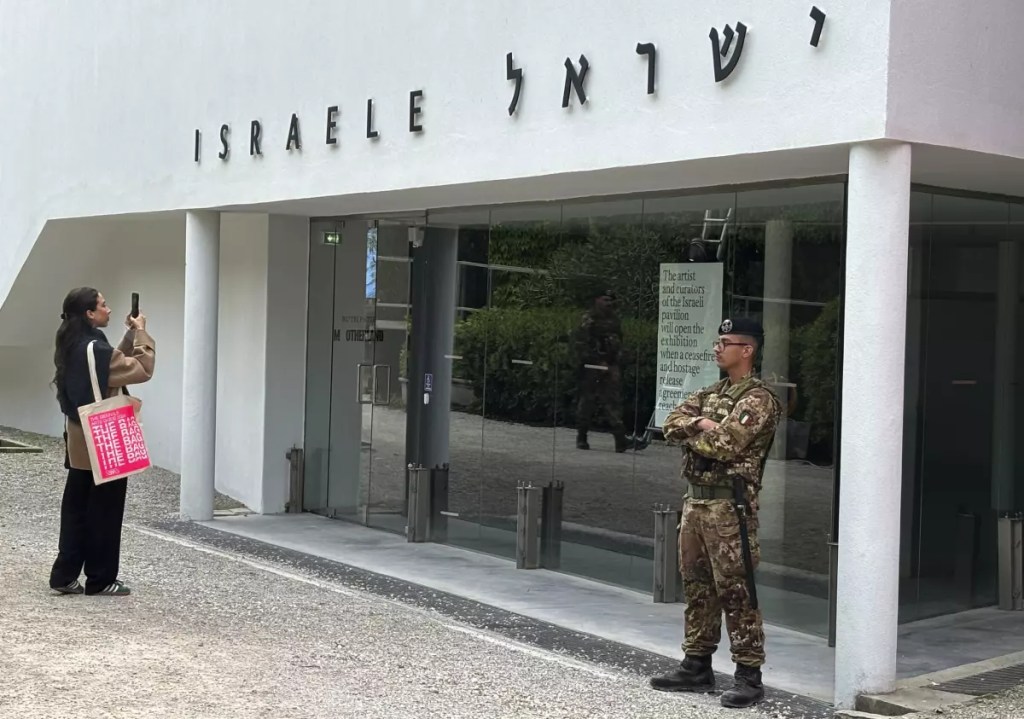
A woman takes a photo as an Italian soldier patrols the Israeli national pavilion at the Biennale contemporary art fair in Venice, Italy, Tuesday, April 16, 2024 (AP Photo/Colleen Barry/Associated Press)
The 60th La Biennale di Venezia International Art Exhibition closes Sunday 24 November at the Giardini and Arsenale venues.

Leave a comment